


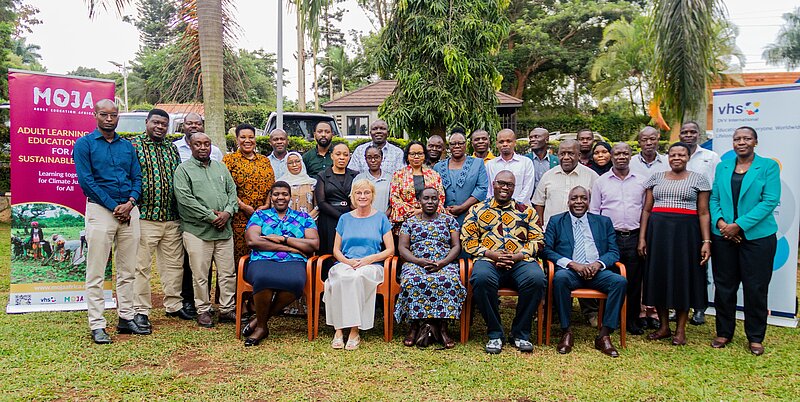
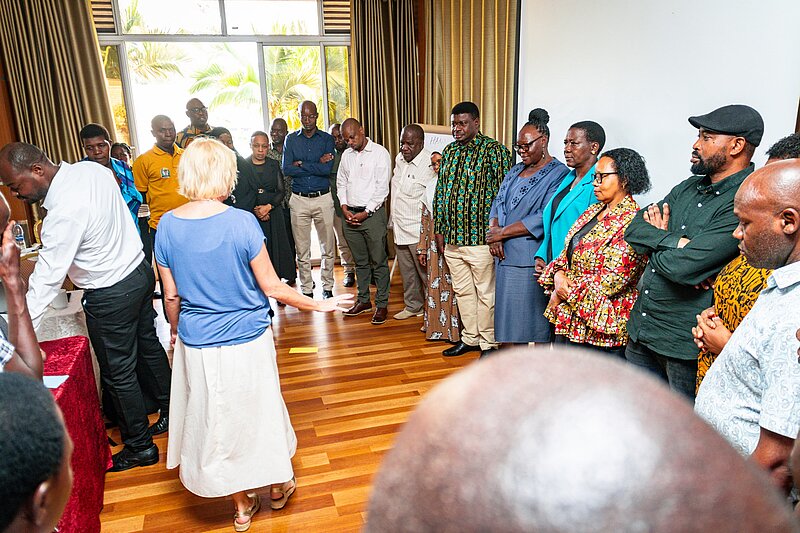
From 25 to 27 May 2026, adult education practitioners, government officials and Community Learning Centre representatives from Tanzania and Uganda came together for a cross-border exchange on Adult Learning and Education (ALE).
Organised by DVV International, the visit was not an introduction to Community Learning Centres (CLC) for Tanzania. Both countries have been implementing Adult and Non-Formal Education (ANFE) programmes and are already using CLC as platforms for literacy, skills development, livelihood improvement and community empowerment. The exchange, therefore, offered a space for equals to compare experiences, examine common challenges and identify approaches that could strengthen implementation in both countries.
The Tanzanian delegation comprised 15 participants, including the Adult and Non-Formal Education Desk Officer from the Ministry of Education, Science and Technology (MoEST), District Adult Education Officers, District Pre- and Primary Education Officers, CLC Coordinators and staff from DVV International Tanzania. They were hosted by representatives of Uganda’s Ministry of Gender, Labour and Social Development (MGLSD), Namayingo District Local Government, Community Development Officers, CLC management committees, facilitators, vocational trainers, learners and DVV International Uganda.
The programme combined a field visit to Madowa Regional Model CLC in Namayingo District with presentations, group discussions and a comparative reflection workshop in Jinja.
Two Countries Pursuing Similar Goals
Uganda and Tanzania use different names and institutional arrangements for their adult education programmes, but the exchange revealed substantial similarities between them.
Uganda implements the Integrated Community Learning for Wealth Creation programme (ICOLEW) under MGLSD. Tanzania implements Integrated Community-Based Adult Education (ICBAE) under MoEST. Both programmes seek to improve literacy and numeracy while enabling young people and adults to develop practical skills, improve their livelihoods and participate more effectively in community development.
They are grounded in lifelong learning, community participation, decentralised implementation and collaboration among government institutions, communities, civil society organisations and development partners. In both countries, CLCs serve as local hubs where communities can access adult literacy, vocational training, livelihood skills, agricultural knowledge, information and other development services. Both models depend on community facilitators, management committees, technical officers and participatory planning processes to ensure that activities respond to local needs.
The exchange showed that the two countries are not working from unrelated models. Rather, they are pursuing similar objectives through different government and administrative structures.
Shared Priorities and Shared Challenges
The discussions revealed common priorities around literacy and numeracy, vocational training, entrepreneurship, community participation, facilitator development, coordination, monitoring and the sustainability of the CLCs.
They also revealed similar challenges. Both countries continue to face limited operational funding, inadequate infrastructure, insufficient vocational training equipment and difficulties retaining adult learners whose attendance may be affected by farming seasons, employment, household responsibilities and other livelihood pressures. Both programmes need continuous refresher training for facilitators, stronger documentation and monitoring, and improved coordination among literacy facilitators, vocational trainers and government technical officers.
There is also a shared need to reduce dependence on development-partner funding by strengthening government financing, local government contributions and responsible income-generating activities at CLC level. The exchange demonstrated that adult learners often require several forms of support at the same time. A tailoring learner, for example, may need literacy and numeracy support to understand measurements, fractions, costing and record keeping. Literacy and vocational training should therefore not operate as separate interventions. They should form an integrated pathway connected to learners’ daily lives, livelihood activities and aspirations.
Government Leadership in Action
On 26 May, the delegation travelled from Jinja to Namayingo District, where the programme began with a courtesy call on the district’s political and administrative leadership.
The delegation was received by representatives of the MGLSD, the District Chairperson, the Chief Administrative Officer, technical officers and other district leaders involved in implementing ICOLEW and supporting CLCs. Importantly, the Chief Administrative Officer not only received the delegation at the district headquarters. He personally joined the participants during the field visit to the Madowa Regional Model CLC.
His participation, alongside national ministry representatives and district political and technical leaders, sent a strong message that adult learning was not being treated simply as a partner-supported project. It was recognised as part of the district’s wider responsibility for community development, skills development and service delivery.
Uganda has also moved ICOLEW beyond its initial pilot phase. After implementation experience and evaluation, the programme was adopted as a successor to the earlier Functional Adult Literacy approach. ICOLEW now receives government support through Social Development non-wage transfers, local government revenue, district and sub-county contributions, and support from development partners. Funding challenges remain, but this arrangement reflects increasing government ownership and provides an institutional foundation for programme continuity.
Community members and local authorities provided land. Buswale Sub-County and Namayingo District contributed approximately UGX 20 million towards the centre, while government planning and development resources supported construction and infrastructure improvements. DVV International contributed equipment, technical assistance and capacity development. The centre’s development demonstrates how government, communities and development partners can combine different resources and bring development.
The CLC has also been incorporated into annual local government planning and budgeting processes. This helps position it as part of the district’s community development infrastructure rather than as a temporary externally supported initiative. For one Tanzanian District Adult Education Officer, the most impressive feature was not a single building or activity, but the collective ownership behind the centre:
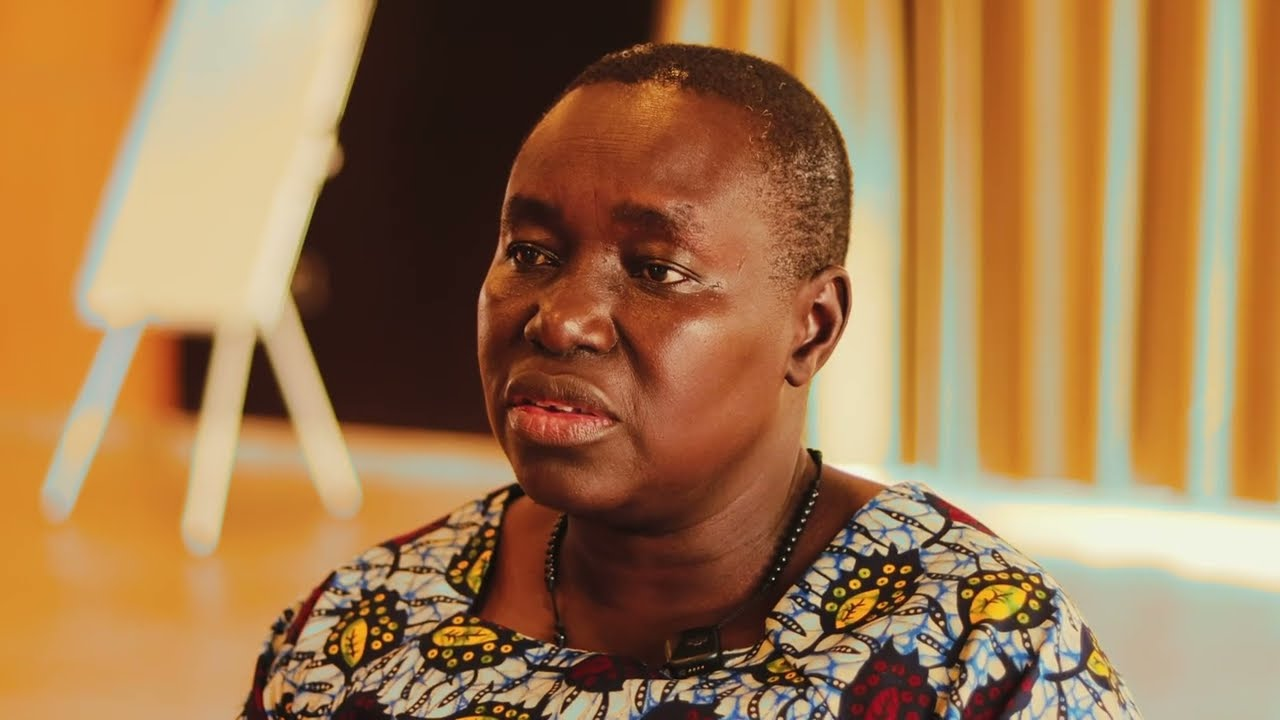
“The true success of the centre lies in its shared ownership. DVV International in Uganda laid the foundation, but it is the unwavering dedication of their learners, the passion of their facilitators, and the active involvement of government officials and diverse stakeholders that breathe life into it. This collaborative approach ensures that the centre belongs to the community and will continue to impact generations to come.”
This observation captured one of the exchange’s central messages: a Community Learning Centre becomes sustainable when government, facilitators, learners, community leaders and partners all see themselves as responsible for its success.
The tour around the CLC
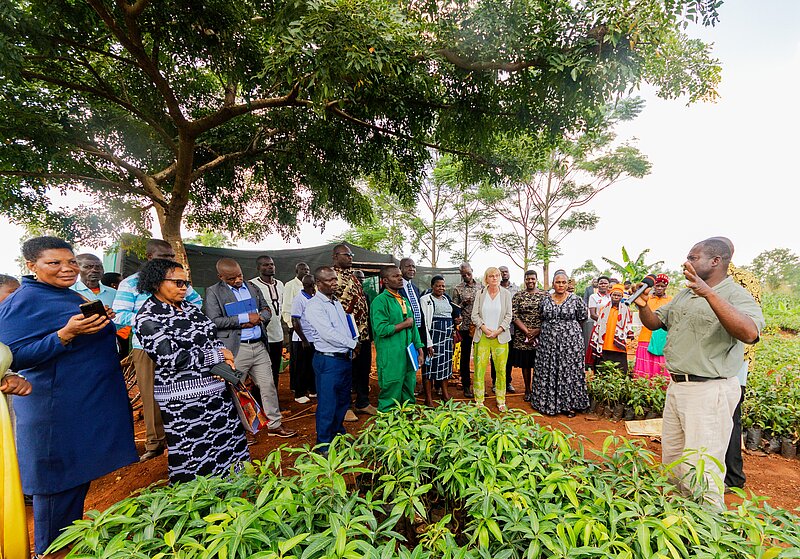
During the guided tour, participants observed how Madowa CLC combines adult literacy and numeracy with vocational training, digital skills, agriculture, environmental conservation and community information services. Activities include tailoring, hairdressing, barbering, computer training, demonstration gardens, tree nurseries and youth programmes. Through collaboration with Community Development Officers, agricultural extension officers, health personnel, vocational trainers and partner organisations, the centre responds to interconnected needs in education, livelihoods, health and environmental management.
Agricultural demonstrations, tree grafting, irrigation and partnerships with organisations such as Trees for the Future provide learners and farmer groups with practical knowledge, seedlings and livelihood opportunities. Vocational and computer training equips young people and adults, particularly young mothers and vulnerable learners, with skills for employment and self-employment, while former learners sometimes return as mentors. The centre also uses television, community information activities and services such as phone charging and facility hiring to attract community members and generate modest income for its operations
A key lesson from Madowa was the integration of literacy and numeracy with vocational and livelihood training. Using participatory approaches such as REFLECT, facilitators develop learning topics from community needs and connect reading, writing and calculations to practical activities such as household budgeting, savings, agriculture, business records and vocational tasks. A tailoring instructor explained that trainers work closely with literacy facilitators when learners struggle with calculations and measurements, enabling them to acquire the numeracy skills needed to progress in tailoring. This makes literacy a practical tool for work, livelihoods and everyday life.
Starting from the Learner’s Actual Level
Participants also learned how the LAMP Scale is used to determine learners’ initial literacy and numeracy levels and monitor their progress throughout the learning cycle. A community facilitator explained that the assessment helps identify each learner’s starting point so that lessons can be delivered gradually and additional support provided where needed. However, the exchange highlighted that effective assessment also requires regular technical support for facilitators to manage mixed-level classes, adapt lesson plans and document learner progress consistently.
Governance, Planning and Financial Management
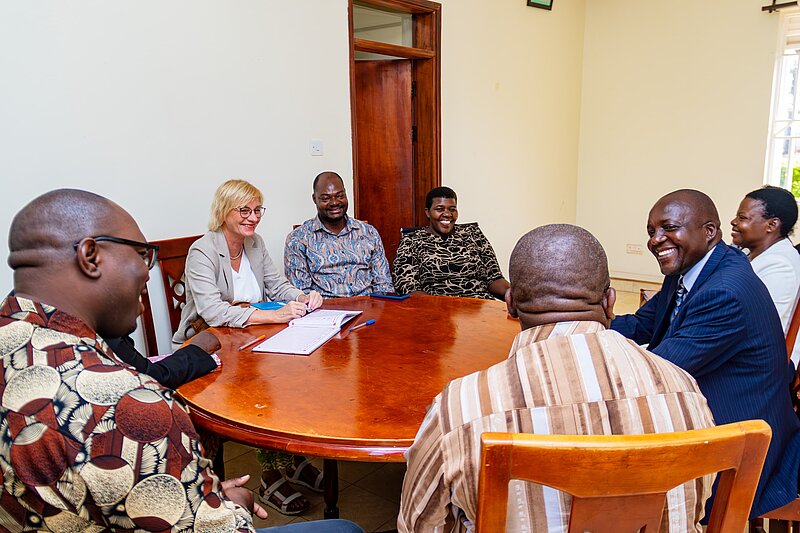
On 27 May 2026, participants met in Jinja for a reflection workshop comparing the governance and coordination arrangements of Uganda’s ICOLEW and Tanzania’s ICBAE models. Both programmes use CLC management committees, community facilitators and local government structures to support planning, mobilisation, monitoring and resource management. However, Uganda’s CLCs are coordinated mainly through Community Development structures, while Tanzania’s are linked more closely to the education system and Ward Education Officers. The Ugandan CLC management committee discussed during the exchange has nine members, compared with six in the Tanzanian model.
Madowa CLC operates through a five-year strategic plan, annual work plans, quarterly management meetings and weekly activity schedules, with planning coordinated across CLC, parish, sub-county and district levels. The centre maintains its own bank account, with signatories appointed by the management committee, while withdrawals must be approved through a formal committee resolution and reported to local government authorities. As the committee chairperson explained, this arrangement gives the centre flexibility to manage approved resources and respond to emerging needs while remaining accountable to the sub-county and district. It also enables the committee to mobilise support from the community, government and partners without unnecessarily delaying activities.
What Tanzania Took from Uganda
For the Tanzanian delegation, the exchange highlighted several practices that could strengthen Community Learning Centres at home.
These included incorporating CLC infrastructure and activities into district and local government plans and budgets; strengthening the participation of political and administrative leaders; maintaining clear financial and administrative records; and giving management committees clearly defined responsibilities.
Participants were also interested in Uganda’s multi-sectoral approach. The involvement of Community Development, Agriculture, Health, Planning, Finance, Commercial Services and other departments demonstrated how CLCs can function as platforms for integrated service delivery rather than as facilities used only for literacy classes. Other areas of learning included the use of independent CLC bank accounts with committee oversight, the integration of literacy and vocational training, structured learning cycles and links to competency-based vocational assessment.
Uganda’s use of the Uganda Vocational and Technical Assessment Board to assess and certify practical skills was of particular interest as Tanzania continues to strengthen recognition and assessment pathways for skills acquired outside formal education.
What Uganda Could Take from Tanzania
Tanzania’s placement of ICBAE and CLC coordination within the education system offers possibilities for stronger pedagogical supervision and closer links between adult learning and local education structures. The role of Ward Education Officers provides an alternative model for coordinating facilitators, monitoring learning sessions and connecting CLC activities with government education systems.
Tanzania’s shorter and more flexible learning arrangements also provided an important point for reflection. Adult learners balance education with farming, informal work, household responsibilities and seasonal livelihoods. Programme schedules and duration therefore need to remain adaptable to their circumstances.
The Tanzanian delegation also shared practical experience from its CLC pilots, including community management, facilitator development, the integration of literacy with livelihood activities and the use of participatory local planning. These experiences gave Ugandan participants an opportunity to assess their own systems against another functioning East African model.
Turning the Visit into Continued Regional Learning
The exchange concluded with a shared commitment to make regional peer learning more structured and continuous. Participants called for stronger follow-up after exchange visits, systematic documentation of lessons, and regular opportunities for communication, joint reflection and professional exchange. Priority areas included integrating literacy, numeracy and practical skills, expanding competency-based assessment, improving CLC planning and financial management, strengthening government investment and providing regular refresher training for facilitators.
The discussions reaffirmed that CLCs can serve as effective platforms for lifelong learning, social inclusion, skills development and improved livelihoods. Their sustainability, however, depends on strong government leadership, community ownership, capable facilitators, coordinated services, accountable management and reliable financing. Closer cooperation between literacy facilitators and vocational trainers, flexible learning schedules and well-managed income-generating activities will also be essential in ensuring that CLCs remain responsive to learners’ needs.
Uganda and Tanzania are pursuing similar goals, confronting many of the same challenges and developing approaches from which both can learn. Madowa Regional Model CLC demonstrated the value of government commitment, senior district leadership, community participation and integrated service delivery, while Tanzania contributed experience in education-sector coordination, pedagogical supervision and flexible learning arrangements. Together, these lessons provide a strong foundation for an East African peer-learning model built on mutual respect, practical cooperation and a shared commitment to ensuring that no adult or young person is left without opportunities to learn, acquire skills and improve their life.