


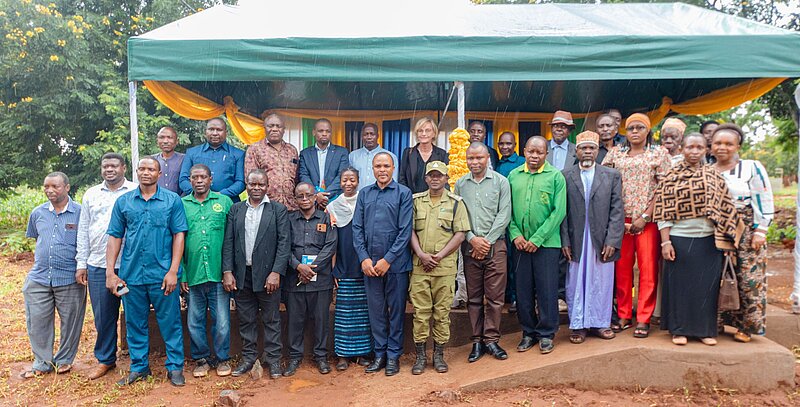
On 4 March 2026, Matomondo Community Learning Centre (CLC) in Mpwapwa District, Dodoma Region, Central Tanzania, hosted an event that was far more than a formal handover ceremony. It was a public demonstration of how a CLC can grow from a place commonly associated with basic literacy into a broader community hub for practical skills, youth empowerment, and local development.
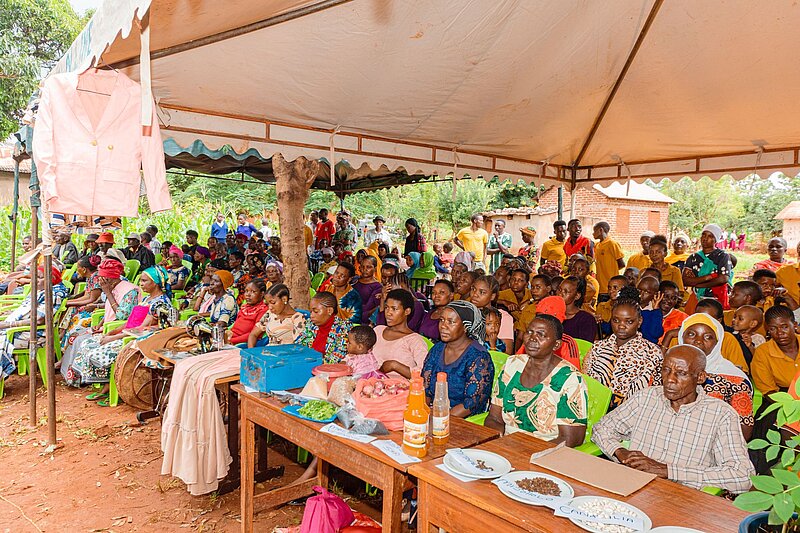
DVV International officially handed over vocational training equipment to support welding and aluminium window fabrication training for young people in the surrounding communities. The event brought together district leaders, local officials, community members, learners, and youth, reflecting the strong local ownership that is increasingly shaping the work of the CLC.
The ceremony was officiated by Mr. Walyego, Divisional Officer, representing the District Commissioner. Also present was Frauke Heinze, Regional Director of DVV International, together with the Senior Desk Officer from DVV International headquarters Aminata Tamboura, and other DVV International staff and district-level representatives, including District Adult Education Officer and Community Development Officer.
Before the public event began, the delegation first held a courtesy engagement with district authorities. At the CLC, the District Adult Education Officer presented a short progress report showing that Matomondo CLC currently has 106 learners under the ICBAE programme. The report highlighted that the centre is already active in literacy, numeracy, agriculture, and practical skills development, with visible achievements including increased enrolment, tailoring activities, and demonstration farming.
The programme then moved into a tour of the centre, where visitors were able to see learner activities and products on display. Tables of local produce and other outputs illustrated that the CLC is already functioning as an active learning and production space. This made the handover especially significant: the new vocational training support is not being introduced into an empty structure, but into a living centre with strong community engagement.
Speaking during the event, Frauke Heinze expressed appreciation for what she witnessed at the centre.
“I am happy to be here and to see how the work, the collaboration between all of you has brought this well, good-looking Community Learning Centre,” she said.
Her remarks captured one of the strongest impressions of the day: that the progress of the CLC is rooted not in one institution alone, but in sustained collaboration between learners, the community, local leadership, district partnership and partners.
It was also noted that the center has garnered significant recognition for its efforts. In a recent monitoring visit, representatives from the Ministry of Education, Science and Technology praised the processes in place at the CLC, highlighting the active engagement of learners and the community, as well as the sense of ownership that has developed. This recognition further reinforced the significance of the event, showing that Matomondo CLC is increasingly being seen as a model of active community learning and participation.
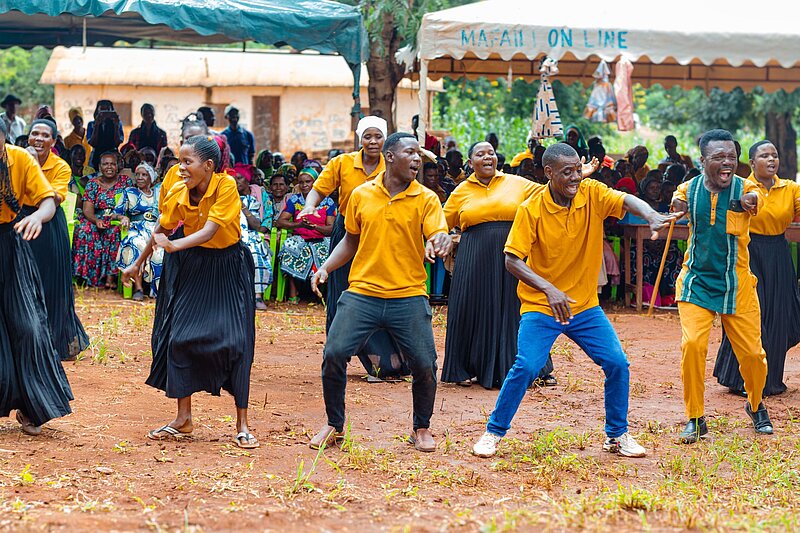
The atmosphere of the day was shaped not only by speeches but also by cultural expression and performance. Dance, drama, and youth participation gave the event a vibrant community character. One drama in particular highlighted a striking social shift: young people are no longer only seen as beneficiaries of the CLC, but are becoming promoters of it. Through the performance, youth encouraged one another not to fear learning, and reminded adults that it is never too late to gain literacy and practical skills.
Local remarks reinforced this broader transformation. In ward-level reflections, the centre was described as no longer only for people who need to learn reading and writing, but as one that has “expanded its scope” to include a wider range of opportunities such as welding, tailoring, agriculture, poultry keeping, beekeeping, and aluminium window fabrication. This message was especially important because it challenged older perceptions and presented the CLC as a place of practical opportunity for the whole community.
The handover of equipment also carries important implications for youth development. Welding and aluminium window fabrication are practical trades that can open pathways to self-employment, apprenticeships, and local income generation. By making such training available within the community, the CLC becomes more relevant to young people who are looking for practical opportunities close to home.
At the same time, the event highlighted that progress does not happen without continued support. Frauke acknowledged that the centre’s story includes both achievements and challenges. “We have heard success stories but also challenges,” she said, before adding that DVV International had already been discussing with district authorities how to move forward. “We are very much looking forward to work hand in hand with district and ward to overcome some challenges and even create more success stories.”
That message gave the event an important sense of realism and partnership. The handover was not presented as a one-off gesture, but as part of a shared effort to keep strengthening the centreover time. It also aligned with her encouragement to the community: “I encourage you to continue in this good path.”
The visible presence of district leadership, ward-level local officials, including the Ward Council and ward education officer, community representatives, showed that the strengthening of the CLC is not the work of one actor alone. It depends on collaboration, follow-up, and continued investment in local ownership. The public nature of the event, combined with the exhibitions and performances, made that collective commitment visible.
Matomondo CLC’s story is therefore about more than equipment. It is about possibility. It is about showing that adult and non-formal education can respond to real community aspirations. And it is about proving that when communities, local authorities, and development partners work together, a learning centre can become a platform for dignity, skills, and transformation.
The handover of vocational training equipment marks an important next step in that journey. It signals a future in which Community Learning Centres are not only places for literacy, but also spaces where education connects directly with livelihoods, youth opportunity, and community development.