


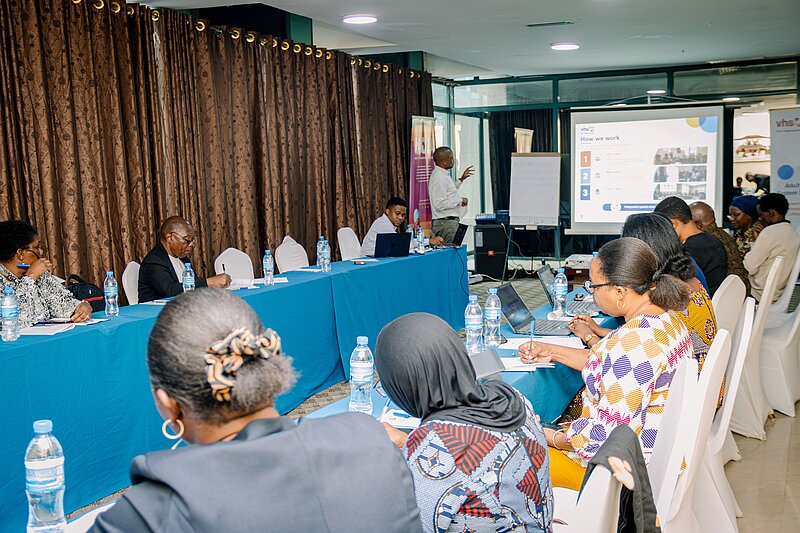
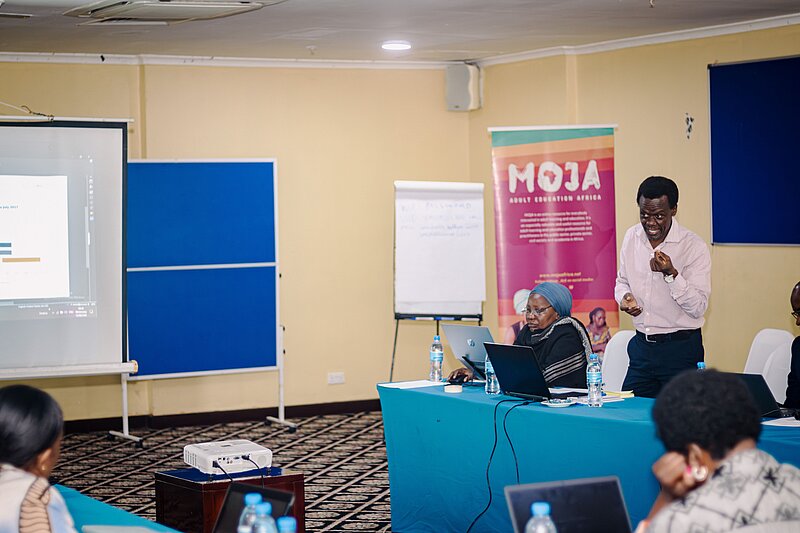
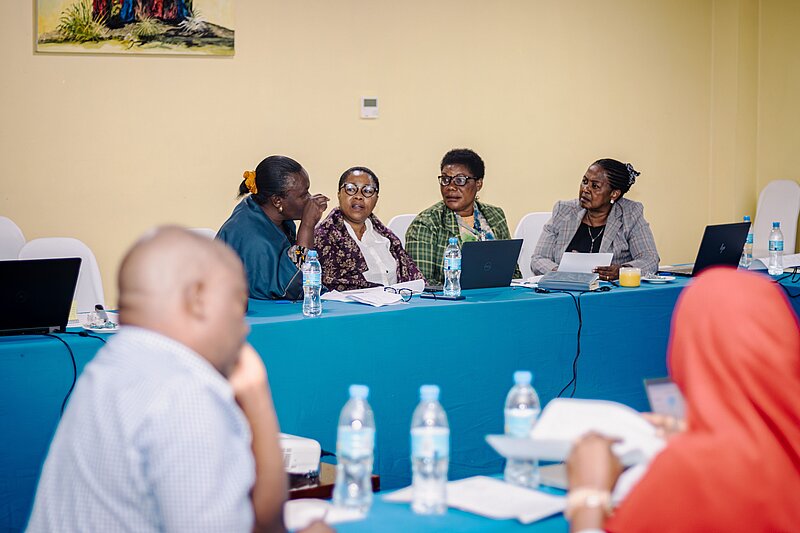

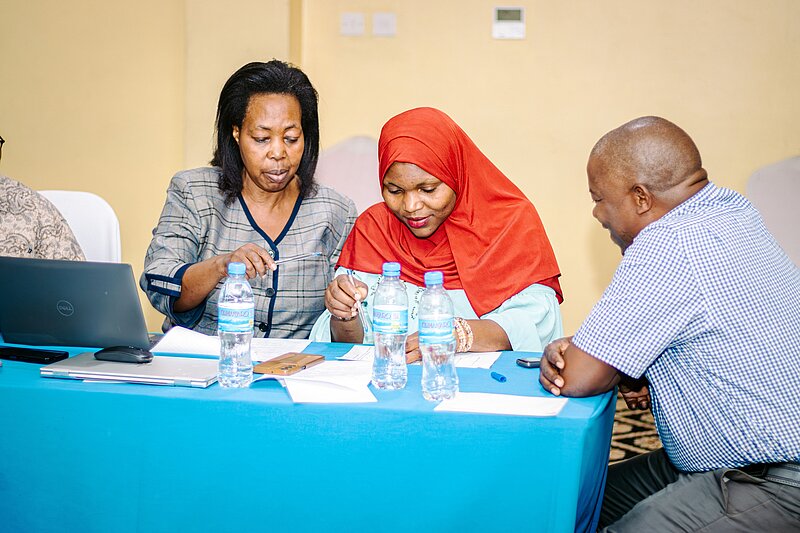
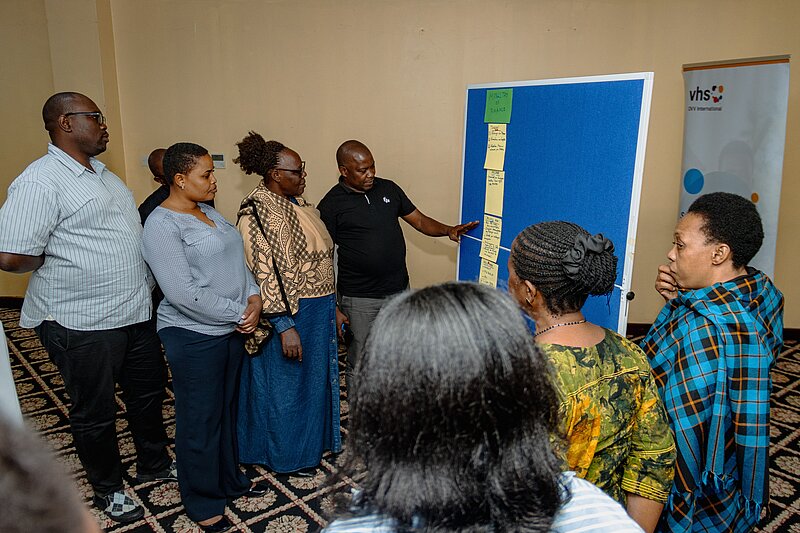
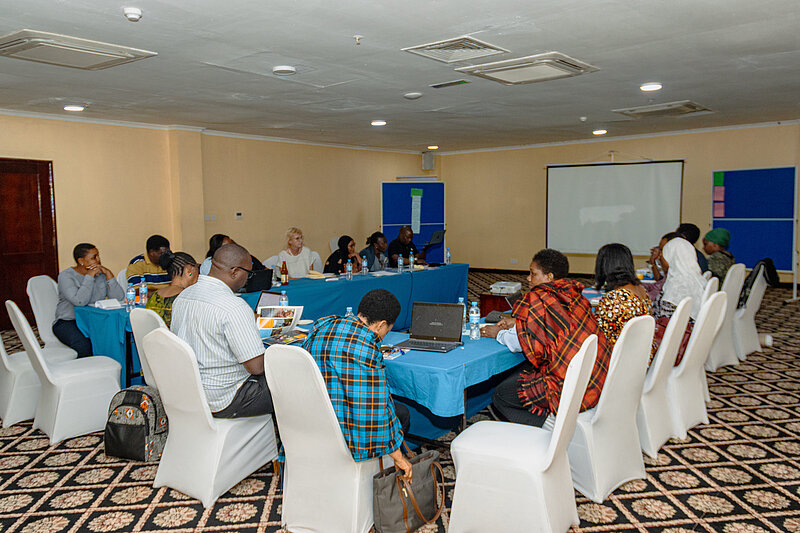
Tanzanian stakeholders in Adult and Non-Formal Education (ANFE) have co-created the framework for a new national strategy aimed at shifting sector advocacy from broad awareness campaigns to targeted, evidence-based policy and budget influence during a three-day Advocacy Capacity Development and Strategy Co-Creation Workshop held in Dar es Salaam from 11–13 August 2026. Convened by DVV International Tanzania via the African Continental Project (ACP) and MOJA – Adult Education Africa, the event brought together 21 key representatives. Participating institutions included MoEST, PO-RALG/TAMISEMI, the Institute of Adult Education (IAE), the National Commission for UNESCO (NATCOM), District Education Offices, and CARE International.
The emerging strategy establishes a coordinated approach to address long-standing sector gaps by connecting hard evidence directly to key decision-makers across government institutions, local authorities, and civil society. Rather than issuing general calls for support, stakeholders are shifting toward precise, actionable requests designed to fit directly into national planning and budget cycles.
Prioritizing Financing and Evidence-Based Advocacy
Securing sustainable financing emerged as the central priority of the strategy. However, stakeholders emphasized that asking for increased funding requires a stronger foundation of verified data.
To influence public expenditure, the sector will prioritize closing critical information gaps—including establishing a comprehensive ANFE financing baseline and consolidating data on staffing levels and regional coverage. Establishing this evidence base will allow advocates to move from broad claims about the value of lifelong learning to concrete proposals during government budget entry points, long before budgets reach formal approval.
Targeting Decision-Makers Through an Action Chain
A core shift outlined in the strategy is moving away from a "one-size-fits-all" approach to communication. Instead, advocacy efforts will rely on a structured execution chain:
Evidence - Problem - Decision-Maker - Advocacy Ask - Messenger - Action - Influence
This framework forces advocates to identify who holds explicit authority over specific budget allocations or policy changes, whether within the Ministry of Finance, the Ministry of Education, Science and Technology (MoEST), PO-RALG/TAMISEMI, or local government councils, and deliver tailored messages through the most credible messengers.
A Coordinated Institutional Front
Recognizing that no single organization can drive systemic change alone, the draft plan establishes defined roles across a broad coalition. The effort aligns government bodies, local government authorities, civil society groups, and adult education institutions to maintain a unified message while leveraging their individual mandates and policy access points.
Immediate Next Steps
Outputs from the initial drafting process will be consolidated into a formal Draft Tanzania ANFE Advocacy Strategy and Implementation Plan over the coming weeks. The draft will then undergo validation with a broader group of national stakeholders, accompanied by early action steps over the next 30 to 60 days to refine decision-maker mapping and strengthen the sector's baseline evidence.
For DVV International, ACP and MOJA, the workshop represents an important step towards strengthening the voice and visibility of Adult and Non-Formal Education in Tanzania.
More importantly, it demonstrated that effective advocacy begins with a shift from simply identifying challenges to asking much more focused questions:
What needs to change? Who can make that change? What evidence will influence them? And what must stakeholders do together to make it happen?
As Tanzania continues to strengthen opportunities for lifelong learning, these questions will be critical to ensuring that Adult and Non-Formal Education receives the policy attention, institutional support and resources required to reach the young people and adults who depend on it.